Businesses today operate in a fast changing environment where speed, accuracy, and flexibility matter more than ever. Traditional systems that rely on manual processes or outdated software can no longer keep up. This is where cloud-based ERP software is transforming how companies manage operations, data, and growth.
From startups to large enterprises, organizations across industries are moving to cloud ERP solutions. The shift is not a trend. It is a long term change in how business management works.
What Is Cloud-Based ERP Software?
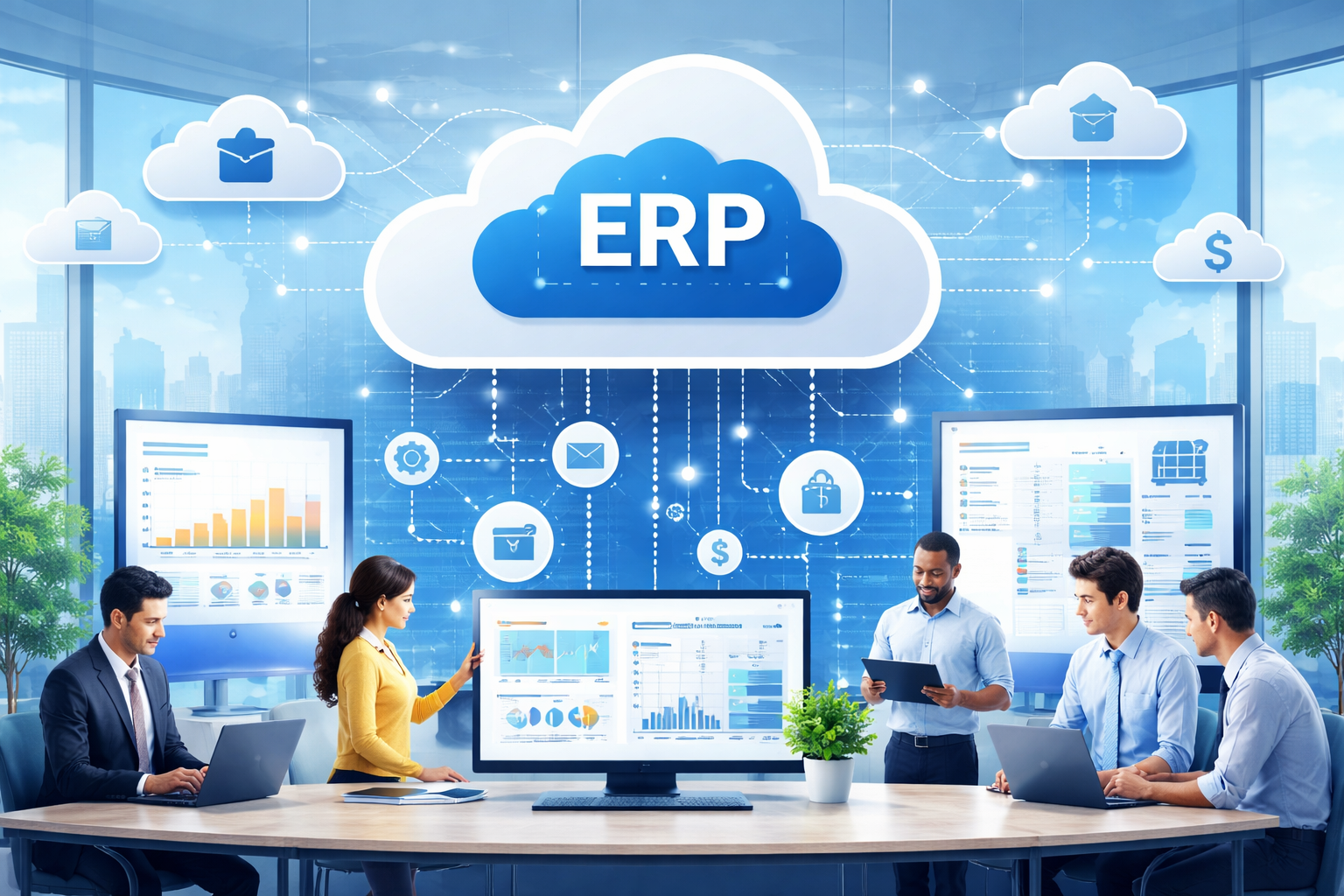
Cloud-based ERP software is an enterprise resource planning system hosted on cloud servers instead of on local company infrastructure. It allows businesses to access data, applications, and reports through the internet from anywhere and on any device.
Unlike on premise ERP systems, cloud ERP does not require heavy hardware investments or complex maintenance. Updates, security, and backups are handled by the ERP software provider, allowing businesses to focus on operations instead of IT challenges.
Greater Flexibility and Remote Access
One of the biggest reasons cloud-based ERP software is the future of business management is flexibility. Teams are no longer limited to working from a single office location. Employees can access real time data from the office, home, or while traveling.
For businesses in Dubai and the UAE, where regional operations and remote teams are common, this flexibility is critical. Decision makers can view reports, track performance, and manage workflows without delays.
Cloud ERP supports modern work environments and enables faster collaboration across departments.
Lower Costs and Predictable Pricing
Cost efficiency is another major advantage. Traditional ERP systems require significant upfront investment in servers, licenses, and IT infrastructure. Maintenance costs continue to rise over time.
Cloud-based ERP software works on a subscription model. Businesses pay for what they use and can scale up or down as needed. There is no need for expensive hardware or large internal IT teams.
For small and medium businesses looking for the best ERP software, cloud solutions offer enterprise-level features without enterprise-level costs.
Scalability That Supports Business Growth
As businesses grow, their systems must grow with them. Cloud ERP makes scaling simple. New users, modules, or features can be added without disrupting operations.
This is especially valuable for companies working with an ERP software development company in Dubai to build custom solutions. Cloud platforms allow developers to enhance functionality as business needs evolve.
Whether expanding into new markets or adding new departments, cloud-based ERP software adapts quickly.
Real-Time Data and Better Decision Making
Modern businesses rely on data to make informed decisions. Cloud ERP systems provide real-time access to accurate data across finance, sales, inventory, HR, and operations.
Managers no longer need to wait for reports or manually combine data from multiple systems. With cloud ERP software, dashboards and analytics are updated instantly.
This leads to faster decision-making, better forecasting, and improved operational control.
Improved Security and Compliance
Many businesses worry about data security when moving to the cloud. In reality, cloud-based ERP software often provides stronger security than on-premises systems.
Leading ERP providers invest heavily in encryption, access control, regular audits, and compliance with international standards. Automatic backups and disaster recovery systems ensure business continuity even during unexpected events.
For companies operating in regulated industries, cloud ERP makes compliance easier by maintaining consistent security practices and audit trails.
Faster Implementation and Updates
Implementing traditional ERP software can take months or even years. Cloud-based ERP software significantly reduces implementation time.
Since the infrastructure already exists, businesses can deploy systems faster and start seeing results sooner. Updates and new features are rolled out automatically without downtime or manual installations.
This ensures businesses always use the latest version of the ERP software without additional cost or effort.
Integration With Modern Business Tools
Cloud ERP systems integrate easily with other cloud applications such as CRM platforms, accounting tools, eCommerce systems, and analytics software.
This creates a connected digital ecosystem where data flows seamlessly between systems. Businesses avoid data silos and improve efficiency across all functions.
An experienced ERP software development company in Dubai can customise integrations to match specific business workflows and industry needs.
Why Businesses Are Choosing Cloud ERP Over Traditional Systems
The shift to cloud-based ERP software is driven by practical benefits, not marketing hype. Businesses want systems that are reliable, scalable, and easy to use.
Cloud ERP supports digital transformation, remote work, cost control, and data-driven decision-making. It reduces complexity while increasing visibility and control.
As technology continues to evolve, cloud platforms provide the foundation businesses need to stay competitive.
Final Thoughts
Cloud-based ERP software is not just an upgrade from traditional systems. It represents a smarter way to manage modern businesses. With lower costs, real time insights, better security, and unmatched flexibility, cloud ERP is becoming the standard for business management.
Companies looking for the best ERP software should consider cloud solutions that align with their growth plans. Partnering with the right ERP software development company in Dubai can help tailor a cloud ERP system that meets specific business goals.
The future of business management is cloud driven, data focused, and built for change. Cloud-based ERP software is leading that future.