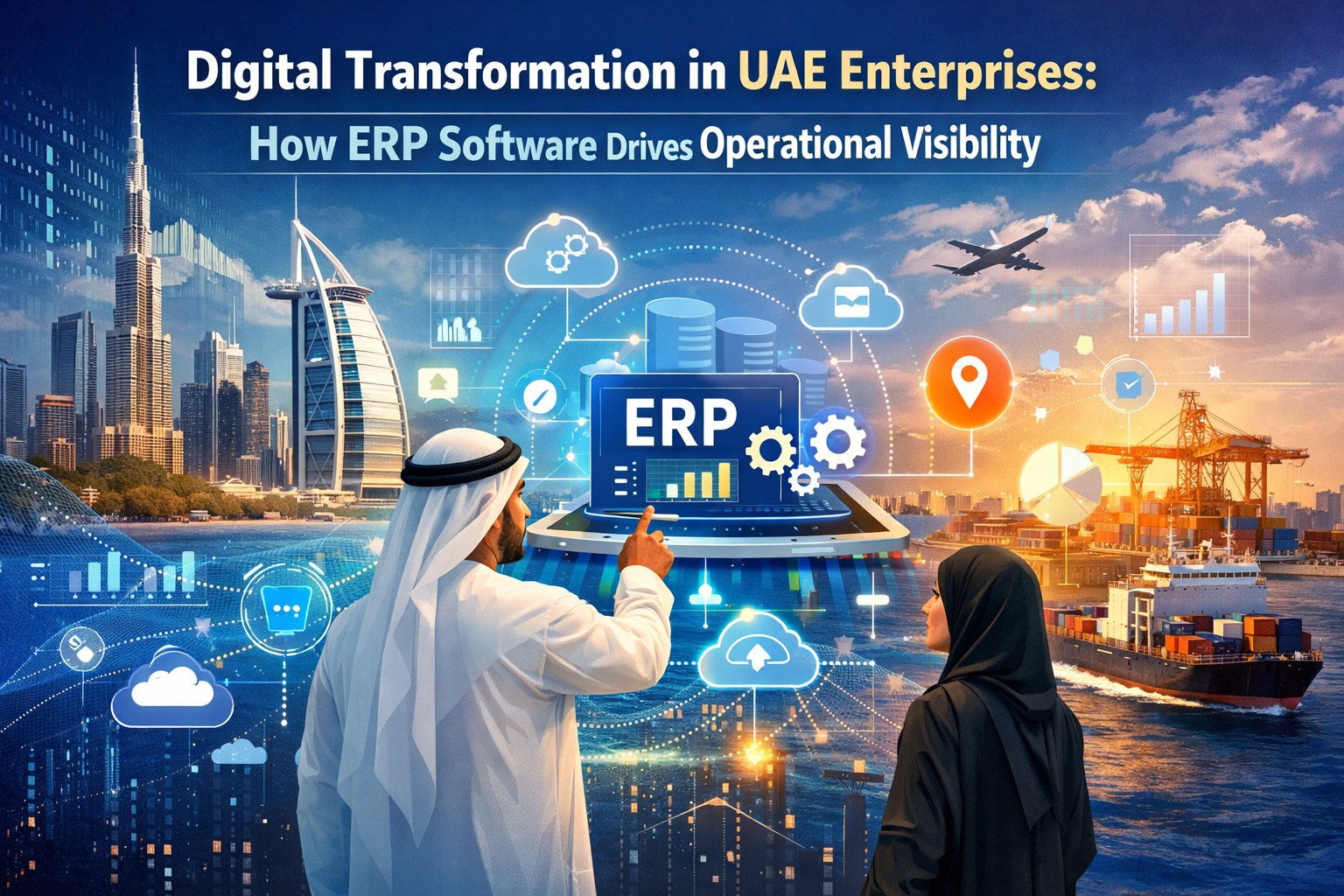
Digital transformation is no longer a future goal for businesses in the UAE. It is already shaping how enterprises operate, compete, and scale. From large conglomerates in Dubai to fast-growing SMEs across the Emirates, organisations are under pressure to improve efficiency, ensure compliance, and make faster decisions based on real data.
At the centre of this shift is ERP software that UAE businesses rely on to gain operational visibility. Without visibility, digital transformation remains a buzzword. With it, leaders gain control.
This article explains how ERP software enables true operational visibility, why it matters in the UAE context, and how enterprises choose the right solution for long-term growth.
Why Operational Visibility Is a Critical Issue for UAE Enterprises
Many UAE businesses still operate with fragmented systems. Accounting software runs separately from inventory. Sales data sits in spreadsheets. Procurement, HR, and operations rarely talk to each other in real time.
This creates real problems:
-
Delayed financial reporting for CFOs
-
Inventory mismatches for trading companies
-
Compliance risks related to VAT and audits
-
Poor forecasting and reactive decision-making
In a competitive market like the UAE, these gaps directly affect profitability and scalability. Digital transformation is meant to solve this. ERP software is the foundation that makes it practical.
What Operational Visibility Really Means in ERP Software
Operational visibility is not just dashboards or reports. It means decision-makers can see what is happening across the business, right now, without manual effort.
With a modern ERP system, UAE enterprises gain:
-
A single source of truth across departments
-
Real-time access to financial, operational, and customer data
-
End-to-end visibility from procurement to delivery to billing
-
Clear accountability across teams and processes
ERP software connects data that previously lived in silos. This connection is what turns data into insight.
How ERP Software Supports Digital Transformation in the UAE
1. Real-Time Data Across Departments
ERP software integrates finance, inventory, sales, HR, and operations into one system. For UAE enterprises managing multiple branches or entities, this is critical.
CEOs and COOs no longer wait for weekly or monthly reports. They can:
-
Track revenue and costs in real time
-
Monitor inventory levels across warehouses
-
See project or order status instantly
This level of transparency enables faster decisions and fewer surprises.
2. Stronger Financial Control and Compliance
UAE regulations around VAT, auditing, and reporting demand accuracy and consistency. Manual processes increase risk.
ERP software helps enterprises:
-
Maintain VAT-compliant invoicing and reporting
-
Automate financial controls and approvals
-
Generate audit-ready reports with minimal effort
For CFOs, this visibility into cash flow, receivables, and liabilities is essential for managing risk and planning growth.
3. Better Inventory and Supply Chain Visibility
For trading, distribution, and manufacturing businesses, inventory is often the largest cost and risk area.
ERP software UAE companies use provides:
-
Real-time stock tracking across locations
-
Visibility into slow-moving or excess inventory
-
Accurate demand forecasting based on historical data
This reduces stockouts, minimizes wastage, and improves working capital management.
4. Data-Driven Decision-Making for Leadership Teams
Digital transformation is about moving from gut-based decisions to data-driven leadership.
With ERP dashboards and reports, leadership teams can:
-
Compare performance across branches or business units
-
Identify bottlenecks in operations
-
Measure KPIs tied to growth, cost control, and efficiency
This visibility allows leadership to act proactively rather than reactively.
ERP Software UAE Market: Why Local Context Matters
The UAE market has unique requirements. Multi-currency transactions, multi-entity structures, VAT compliance, and diverse industries all shape ERP needs.
That is why many businesses evaluate the top 10 ERP software in UAE not only based on global reputation but also local adaptability.
Key factors UAE enterprises consider:
-
Compliance with UAE tax and reporting standards
-
Scalability across GCC operations
-
Local implementation and support expertise
-
Industry-specific functionality
A system that works globally but lacks regional alignment often creates more complexity than clarity.
ERP Software as the Backbone of Scalable Growth
As businesses expand across Dubai and the wider GCC, complexity increases. New branches, new regulations, new teams, and higher transaction volumes can overwhelm legacy systems.
ERP software supports scalability by:
-
Standardizing processes across locations
-
Centralizing data while allowing local flexibility
-
Supporting growth without adding administrative overhead
This is why ERP is often the first major system investment during digital transformation.
Industry-Specific Visibility Through ERP
Different industries require different types of operational insight.
-
Trading companies need visibility into inventory, margins, and supplier performance.
-
Food and beverage businesses require batch tracking, expiry management, and compliance reporting.
-
Manufacturing firms focus on production planning, cost control, and quality tracking.
Modern ERP software adapts to these needs, providing relevant visibility instead of generic reports.
This is where solution providers with industry experience stand out. Enhance ERP provides the best ERP solution in Dubai for various industries by aligning ERP capabilities with real operational requirements rather than forcing businesses to adapt to rigid systems.
Choosing the Right ERP for Operational Visibility
Not all ERP systems deliver the same level of clarity. Some create more complexity through over-customisation or poor implementation.
When evaluating ERP software UAE enterprises should ask:
-
Will this system give real-time visibility or delayed reports?
-
Does it integrate smoothly across departments?
-
Can leadership easily access insights without IT dependency?
-
Is the solution scalable as the business grows?
The right ERP system simplifies decision-making. The wrong one adds noise.
Final Thoughts: Visibility Is the Real Outcome of Digital Transformation
Digital transformation is not about adopting technology for its own sake. It is about gaining control, clarity, and confidence in decision-making.
ERP software enables this by providing operational visibility across finance, operations, inventory, and leadership metrics. For UAE enterprises operating in fast-moving and regulated markets, this visibility is no longer optional.
Whether evaluating the top 10 ERP software in UAE or planning a broader transformation initiative, businesses that prioritise visibility will always move faster and smarter than those relying on fragmented systems.
In the UAE’s competitive landscape, ERP is not just software. It is the backbone of modern, data-driven enterprise management.