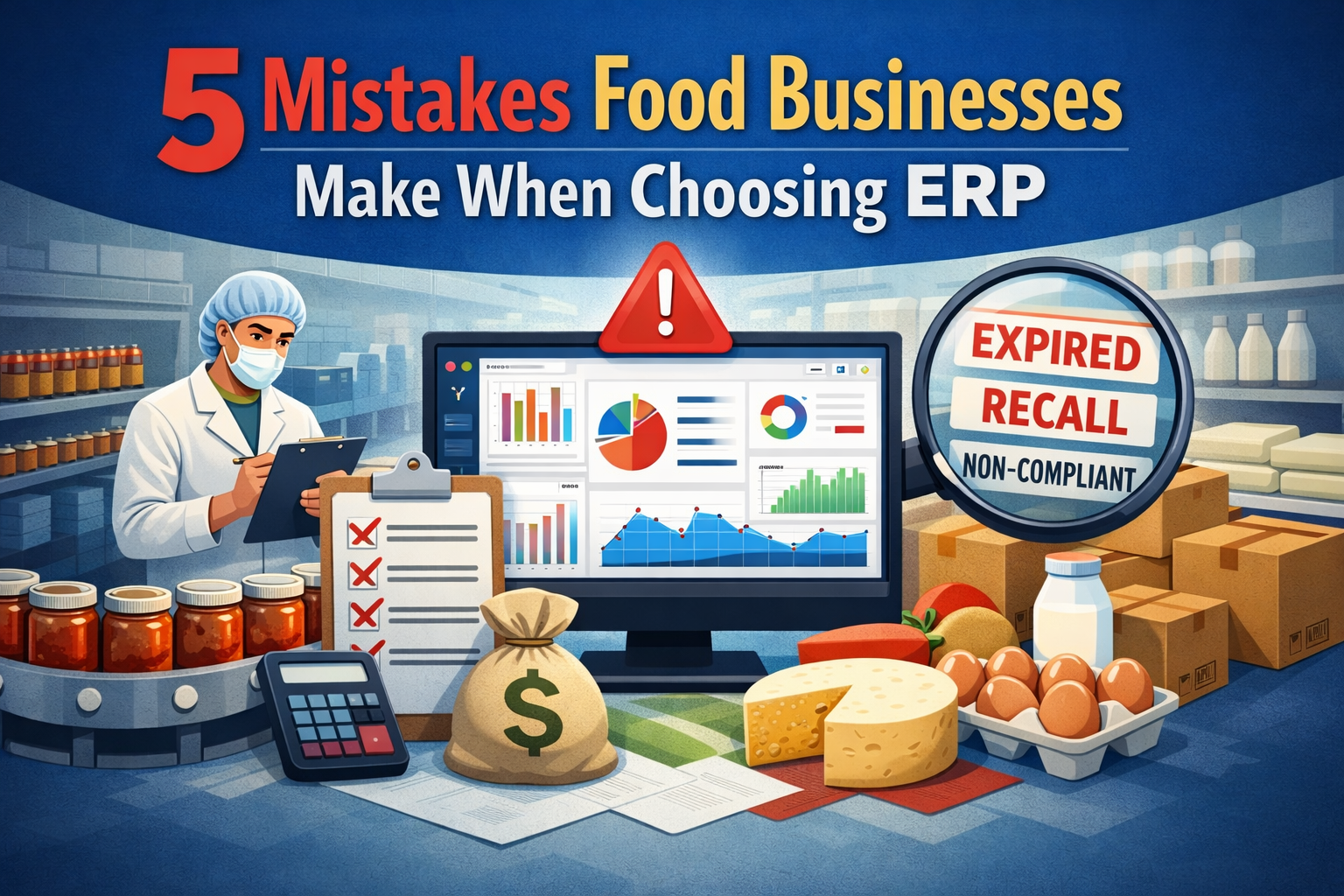
Running a food business is complex. You are managing raw materials, batch production, expiry dates, compliance standards, distributors, retailers, and customers all at once. One mistake in inventory or traceability can cost you money, reputation, and even legal trouble.
That is why choosing the right ERP Software for a food business is such a critical decision. The system you select will shape how your operations run for years.
Yet many companies rush this process. They choose software based on price, brand name, or a sales pitch without fully understanding their own needs.
Here are five common mistakes food businesses make when choosing food industry erp software and how you can avoid them.
1. Choosing Generic ERP Instead of Industry-Specific Software
Not all ERP systems are built for food operations. A generic ERP may work well for trading companies or simple manufacturing units, but food businesses have unique requirements.
You deal with batch tracking, expiry management, recipe formulation, quality checks, temperature control, and strict regulatory compliance. A system that does not support these features natively will force you to rely on manual workarounds or external tools.
For example, if your ERP cannot track raw materials by batch and expiry date, your team may end up maintaining spreadsheets alongside the system. That defeats the purpose of investing in ERP in the first place.
When evaluating options, make sure the solution is designed specifically as food industry erp software. Ask vendors to show how they handle:
-
Batch and lot traceability
-
Expiry date management
-
Recall management
-
Quality control processes
-
Recipe and formula management
The best erp software for food manufacturing will include these features as standard, not as expensive add-ons.
2. Ignoring Scalability and Future Growth
Many food businesses choose ERP based on their current size. A small manufacturer may think, “We only have one factory and a few distributors. We do not need anything advanced.”
But what happens when you expand into new regions? Launch new product lines? Add cold storage facilities? Open multiple warehouses?
If your ERP cannot scale, you will face system limitations within a few years. Migrating to a new system later is far more expensive and disruptive.
When selecting ERP Software for a Food Business, think at least five years ahead. Consider:
-
Multi-warehouse management
-
Multi-location production
-
Multi-currency transactions
-
Integration with e-commerce or retail systems
-
Advanced reporting and analytics
The best erp software for food manufacturing should grow with you, not hold you back.
3. Underestimating Compliance and Traceability Needs
The food industry is heavily regulated. You must comply with local food safety authorities, labeling rules, and international standards if you export.
One of the biggest mistakes companies make is assuming all ERP systems handle compliance automatically. They do not.
You need food industry erp software that supports:
-
Complete farm to fork traceability
-
Automated quality checks
-
Audit trails
-
Document management for certifications
-
Real time stock tracking
Imagine a product recall situation. Without proper traceability, identifying affected batches can take days. During that time, you may have to recall more products than necessary, leading to higher losses.
A strong ERP system should allow you to trace any finished product back to the exact raw material batch within minutes. That is not optional in today’s regulatory environment. It is essential.
4. Focusing Only on Price Instead of Total Value
Cost is important. Every business has a budget. But choosing the cheapest ERP often turns out to be the most expensive mistake.
Low cost systems may lack critical features for food manufacturing. You may end up paying extra for customizations, third party integrations, or manual processes that increase labor costs.
Instead of focusing only on the initial license fee, consider the total cost of ownership:
-
Implementation charges
-
Customization costs
-
Training expenses
-
Ongoing support fees
-
Upgrade costs
Also evaluate the value it brings. Will it reduce wastage? Improve production planning? Minimize stock outs? Strengthen compliance?
The best erp software for food manufacturing should help you improve margins and operational efficiency. If it saves you from one major recall or significantly reduces wastage, the return on investment can be substantial.
5. Neglecting User Adoption and Training
Even the most advanced ERP Software for Food Business will fail if your team does not use it properly.
Some businesses invest heavily in food industry erp software but do not allocate enough time for training. Employees find the system complicated, so they continue using old methods such as paper logs or spreadsheets.
Before finalizing any ERP, ask yourself:
-
Is the interface user friendly?
-
Can production staff easily record data?
-
Does it support mobile or tablet usage on the shop floor?
-
Does the vendor provide structured training?
Involve key team members from production, quality control, finance, and warehouse during the selection process. Let them see demos. Collect their feedback.
When users feel involved, they are more likely to adopt the system. Proper onboarding and continuous support make a significant difference in long term success.
Final Thoughts
Choosing ERP Software for Food Business is not just an IT decision. It is a strategic business decision.
Avoid the common mistakes of selecting generic systems, ignoring future growth, overlooking compliance, focusing only on price, and neglecting user adoption.
Take time to evaluate vendors carefully. Ask detailed questions. Request industry specific demonstrations. Speak with other food manufacturers who use the system.
The right food industry erp software will streamline your operations, strengthen compliance, improve traceability, and support sustainable growth.
When chosen wisely, the best erp software for food manufacturing becomes more than software. It becomes the backbone of your business operations.